A tenant improvement allowance is the sum a landlord agrees to put toward customizing a commercial space for a new tenant. If you have ever priced an office lease and wondered who pays to turn a bare shell into a working floor, the tenant improvement allowance (often shortened to TI allowance or TIA) is usually the answer — and how you negotiate it decides how much of the fit-out lands on your budget.
Quick note: This is general information, not legal or financial advice. Lease terms, tax treatment and market rates vary by state, building and deal — consult a qualified attorney, CPA or commercial real-estate advisor before you sign anything. Figures are US market ranges as of 2026.
This guide breaks down what a TI allowance is, how it is calculated per square foot, what it covers, and how it actually gets paid. It is written from the tenant’s side. At the end, we cover a route many small teams miss entirely: a fitted private office that comes finished on day one, where the whole question of fit-out capital never comes up. For the full picture on longer-term space, our private office guide goes deeper.
Wezoo snapshot — fitted private offices (US)
- Fitted, move-in-ready private offices listed across major US cities
- Starting price range: from $530 to $15,875 per month (whole-office “from” price)
- Median starting price: about $1,935 per month
- Top operators: WeWork, Regus, Spaces
- No build-out, no fit-out capital, no tenant improvement allowance to negotiate
What is a tenant improvement allowance?
A tenant improvement allowance is money a landlord contributes toward construction that makes a leased space usable for a specific tenant. It is quoted as a dollar figure per square foot and capped: it is the maximum the landlord will spend, not a blank check. Spend under the cap and you may keep or lose the difference depending on the lease; spend over it and the overage is yours.
Landlords offer TI allowances because a customized, occupied space is worth more than an empty one, and because a signed multi-year lease justifies the up-front outlay. The trade is simple: the landlord funds part of the build-out, and you commit to rent for long enough to pay it back — directly or through the rate.
How does a tenant improvement allowance work?
The mechanics are straightforward. You agree a rate per square foot, multiply it by the rentable area, and that is your improvement budget. The work is designed, bid, and built; the landlord funds it up to the cap.

Say a landlord offers $40 per square foot on a 5,000-square-foot suite. That is a $200,000 TI budget. If the build-out comes in at $230,000, you cover the extra $30,000 — or ask the landlord to fund it and amortize it back into your rent. The allowance is a starting point for a negotiation, not a fixed gift.
What does a TI allowance cover (and what it doesn’t)?
TI dollars are meant for improvements that become part of the building — the things that stay when you leave. Movable and personal items are usually on you. Authoritative commercial real-estate sources such as LoopNet and Cushman & Wakefield map the split roughly like this:
| What a TI allowance usually covers | What it usually does not cover |
|---|---|
| Interior walls, doors and partitions | Furniture, desks and chairs |
| Flooring, ceilings, paint | Signage and branding |
| Lighting and electrical distribution | Company equipment and hardware |
| HVAC modifications and basic plumbing | IT cabling and phone systems (often) |
| Built-in fixtures that stay with the space | Anything you take with you at move-out |
Read your lease carefully: some landlords also carve out “soft costs” like architect fees, permits and project management, and whether TI can be spent on those is negotiable.
What is a tenant improvement allowance per square foot?
Across the US market, a tenant improvement allowance per square foot typically runs $20–$60, though it swings with property type, location, lease length and how hot the market is. A light refresh needs far less than a ground-up build; a lab or medical suite can push well past $100 per square foot.
| Build-out level | Typical TI allowance (per sq ft) | What it funds |
|---|---|---|
| Light refresh | $10–$25 | Paint, carpet, minor changes to existing layout |
| Standard office build-out | $25–$60 | New walls, finishes, lighting, HVAC tweaks |
| Full / specialized fit-out | $60–$100+ | Ground-up interiors, labs, medical, heavy MEP |
| Example | $40/sq ft × 5,000 sq ft = $200,000 TI budget | |
Two levers move your number: lease term (longer terms justify a bigger allowance) and market conditions (in a tenant-friendly market, landlords sweeten TI to fill space). Ask what comparable deals in the building have secured — brokers see these figures and can benchmark yours.
How is a TI allowance paid — and what does “amortized” mean?
There are two common routes. In the first, the landlord pays contractors directly or reimburses you once the work is signed off and lien waivers are in. In the second, the landlord funds an amount above the base allowance and recovers it through your rent — this is the amortized TI allowance.
Amortization is effectively a loan from the landlord. The extra build-out cost is spread over the lease term, with interest, and added to your monthly rent. It solves a cash-flow problem, but it is not free money: a bigger allowance usually means higher rent, a longer commitment, or both. If your deal leans on net-lease economics, our explainer on the triple net lease shows how operating costs stack on top of base rent — worth reading before you agree to amortized TI.
How do you negotiate a tenant improvement allowance?
Negotiate the allowance as part of the whole economic package, not in isolation. A few tenant-side moves that tend to pay off:
- Tie it to term. Landlords fund more per square foot for longer leases — know the trade before you ask.
- Get the scope in writing. Define what the allowance covers, including soft costs, so nothing gets clawed back later.
- Control the build. If you manage the contractor, you control quality and cost; if the landlord does, pin down finishes and a completion date.
- Compare to base rent and free rent. Sometimes a rent abatement beats a bigger allowance. Run the total cost of occupancy, not one line.
- Plan for overage. Agree up front how overage is handled — paid in cash or amortized — so a surprise invoice does not derail the move.
For a fuller view of what space actually costs once fit-out, rent and services are added up, see our guide to how much a private office costs.
When a fitted private office makes the TI allowance moot
Here is the part conventional lease guides skip. A tenant improvement allowance only matters when you are taking raw or generic space and building it out. Choose a fitted, serviced private office instead and the entire fit-out question disappears — the space is finished, furnished and running before you arrive.
On Wezoo, private offices come move-in ready: desks, meeting rooms, internet, reception and cleaning are bundled into one monthly figure. There is no build-out to fund, no contractor to manage, and no allowance to negotiate. For a growing team that would rather spend cash on people than on partitions, that is the point. Here are three examples of fitted offices you can tour and request — each one skips the TI math entirely:
1. 450 Lexington Ave — WeWork
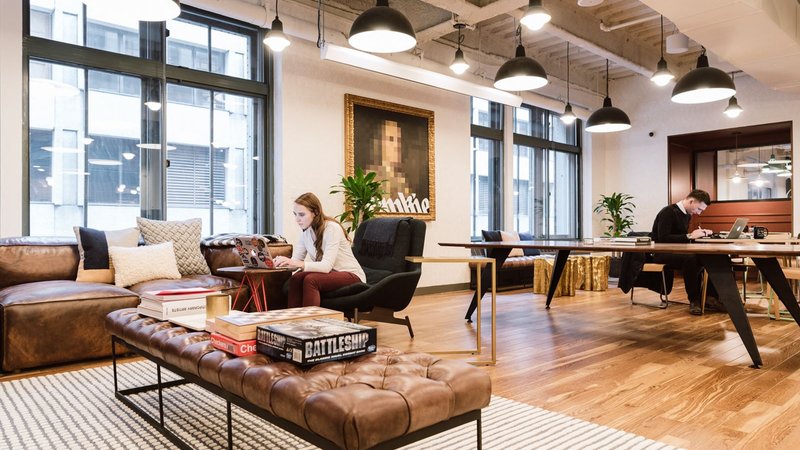
What to expect: A private, lockable office steps from Grand Central, already wired, furnished and cleaned. Desks, chairs, meeting-room access and fast internet are in place on day one, so there is no build-out to fund and no tenant improvement allowance to negotiate — you move in and start working.
Operator: WeWork · Address: 450 Lexington Avenue, New York, NY · Private office from $750/month, up to 3 people, available now.
👉 Request 450 Lexington Ave on Wezoo
2. 600 Third Avenue — Regus

What to expect: A Midtown East suite with reception, coffee, and managed IT bundled into one monthly figure. Because the fit-out is already done and maintained by the operator, the fit-out capital a conventional lease would push onto you simply is not part of the deal.
Operator: Regus · Address: 600 Third Avenue, New York, NY · Private office from $1,467/month, up to 3 people, available now.
👉 Request 600 Third Avenue on Wezoo
3. The Yard: Columbus Circle — The Yard

What to expect: A boutique single-person office near Central Park with design-led interiors already finished. Flexible terms mean you commit to a room, not a multi-year build-out — the classic reason a tenant improvement allowance exists never comes up.
Operator: The Yard · Address: 33 West 60th Street, New York, NY · Private office from $890/month, up to 1 person, available now.
👉 Request The Yard: Columbus Circle on Wezoo
Ready to skip the build-out and the TI math?
Frequently asked questions
What is a tenant improvement allowance in simple terms?
It is money a landlord agrees to spend improving a leased space for you, quoted per square foot and capped. You get the space built out; the landlord recovers the cost through a longer lease or higher rent.
What does TI allowance mean?
TI allowance (or TIA) stands for tenant improvement allowance. “TI” refers to the tenant improvements — the construction and finishes — and the allowance is the landlord’s contribution toward them.
How does a tenant improvement allowance work?
You agree a per-square-foot rate, multiply by the area to get a budget, then the build-out is designed and built. The landlord funds the work up to the cap; you cover anything above it, in cash or amortized into rent.
What is a typical tenant improvement allowance per square foot?
Most US office deals land between $20 and $60 per square foot. Light refreshes need less; specialized fit-outs like labs or medical suites can exceed $100 per square foot.
Is a tenant improvement allowance taxable or free money?
It is not free — landlords recover it through rent and lease length, and the tax treatment can be complex. Talk to a CPA about how a given allowance is booked; this article is general information, not tax advice.
Can I avoid needing a tenant improvement allowance?
Yes. A fitted, serviced private office comes finished and furnished, so there is no build-out to fund and no allowance to negotiate. You commit to a monthly rate for a ready-to-use space instead.